Chef Robotics Reaches 100 Million Servings Milestone, Navigating the Fraught Landscape of Food Automation

The complex and often unforgiving terrain of food automation has claimed numerous ambitious ventures, a reality frequently acknowledged by Rajat Bhageria, CEO of Chef Robotics. The industry is indeed a "startup graveyard," as Bhageria accurately observes, citing prominent examples like Chowbotics, a salad-making robot startup acquired by DoorDash only to be subsequently shut down, and Zume, a $400 million endeavor to revolutionize pizza delivery that collapsed in 2023. These high-profile failures underscore the inherent difficulties in automating tasks that have traditionally relied on human dexterity and cognitive abilities.
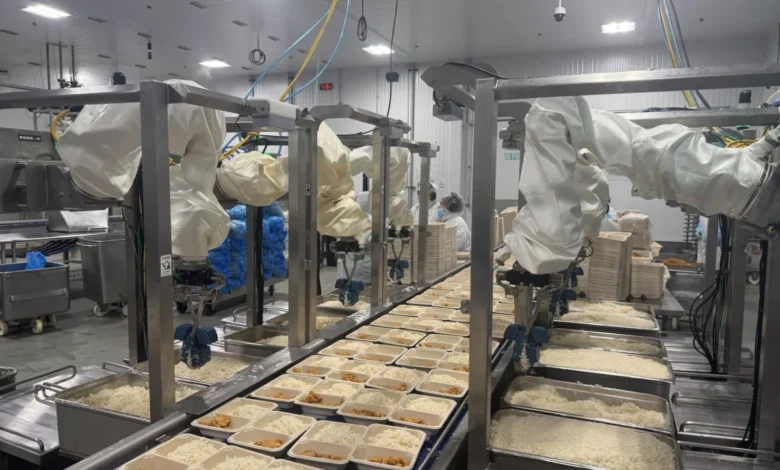
Despite these cautionary tales, Bhageria believes Chef Robotics has identified a viable path forward. The company’s strategy centers on leveraging AI-powered robot arms to streamline large-scale food production. While Chef Robotics initially aimed to deploy its technology in fast-casual restaurants, a strategic pivot led them to focus on the food manufacturing sector. This shift has proven successful, with the company now serving prominent enterprise clients such as Amy’s Kitchen and Chef Bombay, and collaborating with one of the nation’s largest school lunch providers.
The company recently announced a significant achievement: surpassing 100 million "servings" processed by its robotic systems. A serving, as defined by a Chef Robotics spokesperson, represents "a portion of food that our robots deposit into a meal tray." This definition clarifies that a serving is not a complete meal but rather a single component of one. This milestone signifies a period of intense activity for Chef Robotics, bolstered by its strategic focus on larger, institutional-scale clients rather than more traditional dining establishments.
Expanding Horizons: From Manufacturing to Diverse "Smaller Kitchens"
Chef Robotics is not resting on its laurels. The company is actively planning to expand its reach into what Bhageria describes as "smaller kitchens." This designation may come as a surprise, as one of Chef Robotics’ recently acquired "smaller" customers is identified as "one of the largest airline catering companies in the world." This indicates a broad interpretation of "smaller kitchens," encompassing operations that, while perhaps not traditional restaurants, involve significant food preparation and assembly at scale.
Further diversification of its client base is also underway. Chef Robotics has outlined plans to enter the "ghost kitchen" market. These facilities, which operate without a physical storefront and primarily serve delivery platforms like DoorDash, represent a growing segment of the food service industry. Bhageria also expressed aspirations for future expansion into other venues, including stadiums and correctional facilities, signaling a comprehensive approach to addressing automation needs across various food service environments.
The Power of Data: Refining AI for Food Handling
The accumulation of data from 100 million processed servings is proving instrumental in refining Chef Robotics’ AI models. This data is continuously fed back into systems designed for food handling and packaging, enhancing their intelligence and capabilities. Bhageria highlights the inherent challenges in automating food manipulation, describing food as a product with "slippery and malleable" characteristics and unpredictable proportions. This complexity makes precise robotic handling a significant hurdle. Chef Robotics’ approach aims to iteratively improve its AI models, enabling robots to become increasingly adept at their tasks and facilitating further business scalability.
The Troubled History of Food Automation
The ambition to automate food preparation and service has a long and often disappointing history. The failures of companies like Chowbotics and Zume are stark reminders of the technological and operational hurdles involved.
-
Chowbotics: Founded in 2015, Chowbotics aimed to revolutionize healthy eating with its salad-making robot, Sally. The company raised significant funding and saw deployments in various locations, including corporate offices and university campuses. In 2021, DoorDash acquired Chowbotics for an undisclosed sum, with the intention of integrating its technology into DoorDash’s broader food delivery ecosystem. However, by July 2022, DoorDash announced the discontinuation of Sally, citing a strategic refocus. This marked the end of a promising but ultimately unsuccessful venture in automated food assembly.
-
Zume: Zume, formerly Zume Pizza, emerged in 2015 with a vision to disrupt the $40 billion pizza industry through a combination of robotics, AI, and logistics. The company sought to automate pizza preparation and delivery, famously using robotic arms to load pizzas into custom delivery trucks. At its peak, Zume was valued at $400 million and attracted substantial investment. However, the company struggled to achieve profitability and faced challenges in scaling its operations effectively. In late 2023, reports confirmed Zume’s collapse, with many of its employees laid off and its assets reportedly being sold off. The company’s ambitious goals, coupled with the inherent complexities of food production and delivery at scale, ultimately proved insurmountable.
These examples illustrate the difficulty in creating sustainable and profitable businesses in the food automation sector. Key challenges include:
- The Nuances of Food Handling: Food is not a uniform or predictable material. Its texture, temperature, and form can vary significantly, requiring sophisticated sensing and manipulation capabilities that are difficult to replicate with current robotic technology.
- Cost-Effectiveness: The capital investment in robotics and AI, coupled with ongoing maintenance and development costs, must be offset by significant labor savings or increased efficiency. Achieving this balance, particularly in a sector with traditionally lower profit margins, has been a major obstacle.
- Consumer Acceptance and Experience: While automation can offer consistency, it can also detract from the perceived quality or experience of food preparation and service, especially in customer-facing roles.
- Scalability and Flexibility: As seen with Chef Robotics’ initial pivot, adapting robotic solutions to diverse operational environments and rapidly changing market demands is crucial for long-term success.
Chef Robotics’ Differentiated Approach
Chef Robotics’ apparent success in navigating these challenges can be attributed to its strategic focus. By targeting the food manufacturing sector and partnering with established enterprise clients, the company has bypassed the direct consumer interface that proved problematic for others. Large-scale food production offers a more controlled environment for robotic deployment, with standardized processes and greater predictability.
Furthermore, the company’s emphasis on AI-driven continuous improvement, fueled by the vast dataset from its 100 million servings, suggests a commitment to developing robust and adaptable robotic solutions. This iterative approach is critical for tackling the inherent variability of food products.
Broader Implications for the Food Industry
Chef Robotics’ milestone and expansion plans have significant implications for the broader food industry:
- Addressing Labor Shortages: The food manufacturing and service sectors have long grappled with labor shortages and high employee turnover. Automation offers a potential solution to these persistent issues, enabling companies to maintain production levels and improve operational efficiency.
- Enhancing Food Safety and Consistency: Robots can perform tasks with a high degree of precision and consistency, reducing the risk of human error and contributing to improved food safety standards.
- Driving Innovation in Food Production: The development of more sophisticated food-handling robots can unlock new possibilities in food product development and packaging, leading to more diverse and customized offerings.
- The Future of Food Service: As Chef Robotics expands into areas like ghost kitchens and airline catering, it signals a potential future where automation plays an increasingly integral role in delivering meals across various segments of the food service industry.
The journey of food automation remains a challenging one, marked by both innovation and significant setbacks. Chef Robotics’ achievement of 100 million servings, coupled with its strategic diversification, suggests a promising, albeit still evolving, model for success in this complex and dynamic field. The company’s ability to adapt, learn from data, and target specific market needs will be crucial as it continues to navigate the future of automated food production.